Why Your Website Isn’t Getting Leads (And How to Fix It)


You want your website to bring in qualified inquiries while you get on with the work you actually started the business to do.
Right now it does something else. Analytics shows people arriving. The phone stays quiet. You paid for the site, you like how it looks, and you have no way to tell which part of it is losing the customer.
That gap has a cause. It is rarely the one business owners guess first, and it is almost always measurable. Six frictions account for most of the leads a small business website drops, and you can check every one of them yourself in under an hour.
You should not have to be a developer to find out why your own website is costing you customers.
We rebuild websites that look fine and perform badly. That is most of our work. We hold the CPWA credential (Certified Professional in Web Accessibility) and Certified Webflow Expert status, with eleven years of front-end work behind it, and we have run this diagnostic on healthcare practices, credit unions, contractors, and service businesses across Washington.
Here is what we look for, in the order we look for it.
The most common conversion problem is a homepage headline that describes the company instead of the customer's outcome. A visitor who has to read three sections to work out whether you solve their problem usually does not read three sections.
How to fix it:
Every field you add gives the visitor another reason to close the tab. We regularly see contact forms with nine fields, three of them required and none of them necessary to start a conversation.
How to fix it:
autocomplete attributes (name, email, tel). This is a WCAG 2.2 Level AA requirement under 1.3.5 Identify Input Purpose, and it cuts mobile form abandonment noticeably.Speed tests run on office fibre tell you very little. Your customer is in a parking lot on three bars.
How to fix it:
Accessibility gets filed under legal risk, which buries the more useful point: an inaccessible site is a site that some percentage of your paying customers cannot complete a purchase on. Roughly one in four US adults has a disability, and the number climbs sharply with age. If your customers skew over 55, treat this as a revenue line item.
How to fix it:
We cover the full process in our practical guide to Webflow accessibility, and the free tools we use for testing are listed in our accessibility testing toolkit.
A page offering a download, a newsletter signup, a phone number, a chat widget, and a quote request is asking the visitor to make a decision you should have made for them.
How to fix it:
Visitors arrive skeptical. A generic testimonial with a first name and no result does very little to change that.
How to fix it:
Guessing is expensive. Three checks tell you where the leak is:
Our process for a conversion problem runs in three steps.
Every project includes accessibility and search optimization by default. We do not sell them as add-ons, because a site that excludes people or cannot be found is not finished.
Nothing dramatic. That is the difficulty with this problem. The site keeps running, the bill keeps getting paid, and the inquiries keep going to the competitor whose form takes twenty seconds instead of two minutes. A year of that is a year of leads you never knew you had.
You stop wondering whether the website is doing anything. You open your email and there are inquiries in it from people who already know what you do and what it costs. Your team stops explaining basics on the first call. When someone asks how business is going, you have a number.
Changes to messaging, forms, and calls to action affect conversion immediately, so you can see a difference within two to four weeks on pages that already get traffic. Changes that depend on search visibility take longer, usually three to six months.
Usually not. Most of the six frictions above are fixed on existing pages. We recommend a rebuild when the site is on a platform that blocks the fixes, or when the underlying structure makes every page slow.
Yes. Larger tap targets, visible labels, working keyboard access, and stronger contrast improve completion rates for every visitor, not only for people using assistive technology. Accessibility work and conversion work overlap heavily.
It depends on how many pages need work and whether the platform supports the fixes. Our website project cost calculator gives you a range in a couple of minutes with no email required.
We audit any platform and tell you what is wrong. We build and maintain in Webflow only, so if the fixes need development work, that comes as a rebuild or platform takeover.
Send us your website. We will tell you which of these six frictions applies to it and what it would take to fix.
Not ready for that conversation? Get a price range first with our website project cost calculator, or read how we handle accessibility remediation and ongoing website maintenance.
We build accessible, conversion-focused Webflow websites for businesses across Yakima and the US. Crystal Scott is a Certified Professional in Web Accessibility (CPWA) with 11+ years of front-end experience.
Our services:
Transparent pricing on every service page. Request a quote and get a response within one business day.
Written by Crystal Scott, CPWA and Certified Webflow Expert.
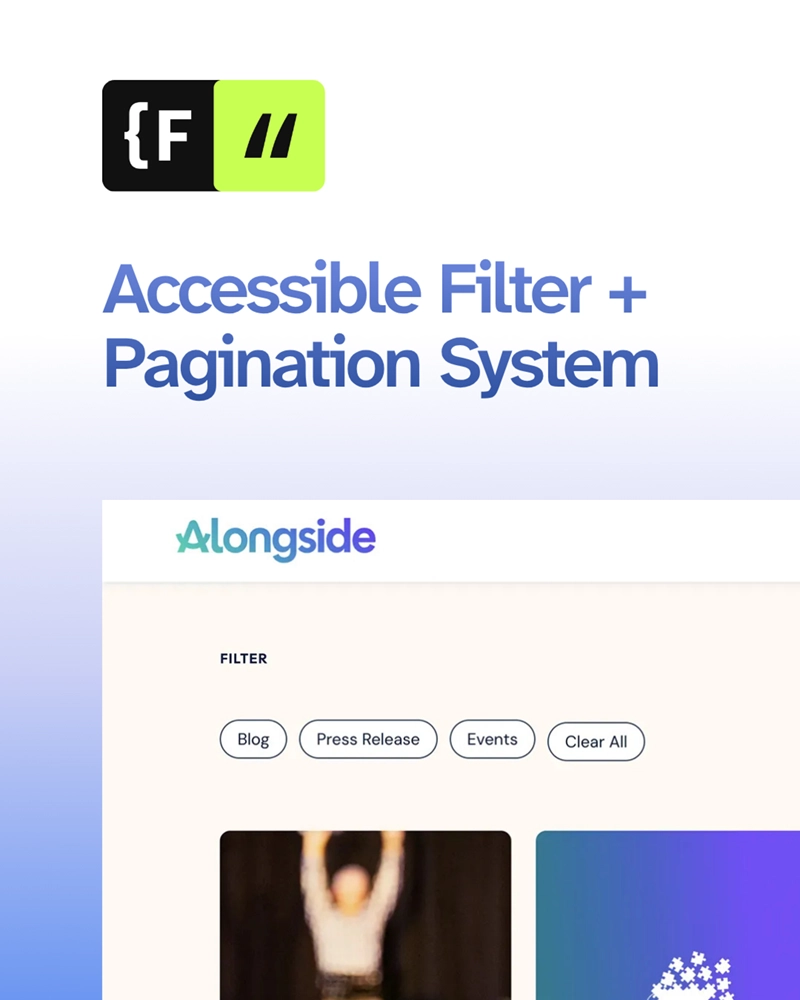
How we built a fully accessible Webflow blog with filters, search, and pagination using Finsweet Attributes, plus tips to avoid common pitfalls.
A current, plain-English guide to the web accessibility standards that matter, plus universal design resources for building for everyone.
Ethically optimize your site for AEO, GEO, and accessibility to get featured in AI search results and answer engines like ChatGPT, SGE, and Alexa.
We would love to meet with you face-to-face. Whether virtually or for a coffee. Request a free project quote, and let’s find the right solution for you! We review your site, set-up a disocvery session and map out goals for a website that grows your business.